
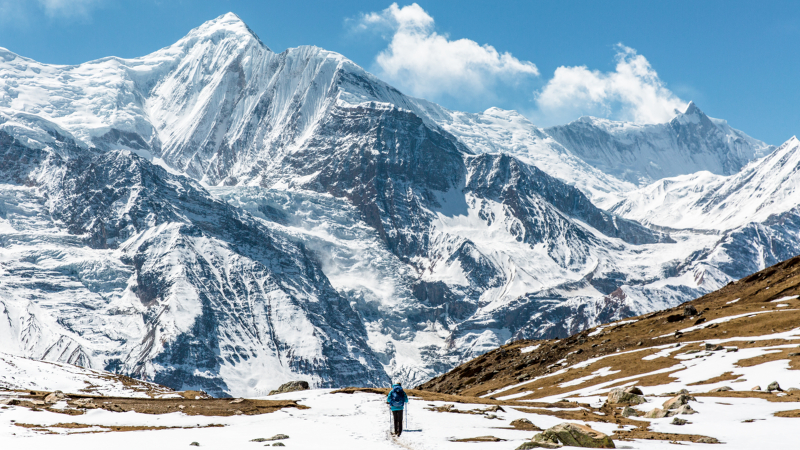







The Annapurna Circuit is a breathtaking trek in Nepal, circling the Annapurna Massif and offering diverse landscapes from lush forests to high-altitude deserts. It typically takes 10-15 days, reaching a maximum altitude of 5,416 meters (17,769 feet) at Thorung La Pass. It offers panoramic views of Annapurna and Dhaulagiri ranges, cultural immersion in Gurung and Thakali villages, and natural attractions like hot springs and waterfalls. Annapurna circuit is challenging but rewards with unparalleled natural beauty and the sense of accomplishment.
Trek Difficulty and Preparations for Annapurna Circuit Trek
It is important to understand the Annapurna Circuit Trek in Nepal’s difficulty, and adequately preparing for the journey are very important for a successful and enjoyable experience.
Altitude: The Ultimate Challenge
Annapurna circuit in Nepal isn’t defined by technicality; rather, it’s an altitude game. Scaling above 5,000 meters in the Himalayas poses the greatest challenge. Despite prior trekking experience at high elevations in other regions, acclimatization remains crucial. The thin air can pose a greater obstacle than the trek’s physical demands.
Fitness and Training
Physical fitness significantly impacts your trek. While the route doesn’t demand technical climbing skills, it requires endurance. A well-rounded fitness regimen pre-trek aids in building stamina, strength, and cardiovascular endurance. Focusing on leg strength and aerobic fitness through activities like hiking, running, and cycling prepares your body for the demands of the trail.
Gradual Ascent for Acclimatization
The trek’s design factors in gradual ascents to aid in acclimatization. The itinerary typically includes one rest days and moderate daily distances. These intentional breaks allow your body to adjust gradually to the diminishing oxygen levels, reducing the risk of altitude-related illnesses.
Awareness of Altitude Sickness
Altitude sickness, particularly acute mountain sickness (AMS), is a significant concern. Symptoms such as headaches, nausea, and fatigue may occur due to the decreased oxygen at higher altitudes. Recognizing these signs and understanding when to rest or descend is crucial.
Hydration and Nutrition
Staying hydrated and well-nourished is vital during the trek. Dehydration worsens altitude-related issues, while a balanced diet aids in energy levels and recovery. Carbohydrates are particularly helpful, assisting the body in efficiently utilizing oxygen at high elevations.
Trekking Pace and Rest
Pacing oneself and heeding one’s body’s cues are fundamental. Striking a balance between consistent progress and rest is key. Restful sleep and ample breaks help combat fatigue and aid in acclimatization. Overexertion and rapid ascents significantly increase the risk of altitude sickness.
Preparation Checklist
A thorough packing list is indispensable. Adequate gear, including sturdy hiking boots, breathable clothing, and essential equipment, ensures comfort and safety throughout the trek. Technical clothing suited for varying weather conditions and proper trekking boots for difficult terrain are non-negotiable items.
Mental Preparation
Lastly, mental preparedness is as crucial as physical readiness. Mentally embracing the challenge, staying positive, and maintaining realistic expectations empower trekkers to conquer the trail.
In summary, while the Annapurna circuit Trek in Nepal isn’t a technical climb, its altitude demands respect and preparation. Fitness training, gradual ascent, awareness of altitude sickness, nutrition, pacing, and mental readiness collectively ensure a safe, enjoyable, and successful journey.
What to bring?
Trekking pole
Sunscreen
Pairs of socks
Trousers (3+)
Backpack for yourself
Water bottle
Headlamp
Jacket(down)
T-shirts(x4+)
Hat
Underwear
Some Snacks
Normal jacket
Sunglass
Note:
Pickup location: Hotel in Kathmandu
Drop location: Hotel in Pokhara
– Up in the mountains, you can buy the water packed in the bottle in every teahouse, and it is charged as an
extra. Thus we have not included water in the package. Also there are some who carries water purifying
tablets and put it in the tap water. We highly suggest you to carry a flask/ water bottle so that you can fill up
on the way.
– Beside trekking we also operate different tours and trekking in Bhutan and Tibet.